Outer Banks septic guide
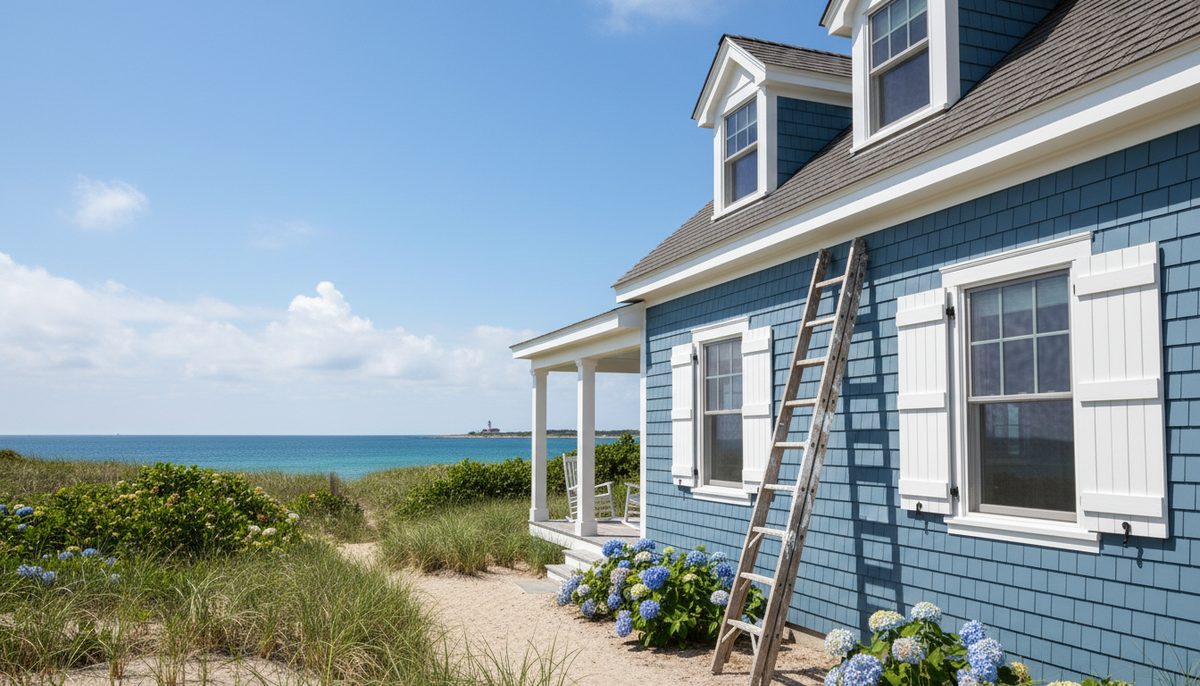
How to choose a painter on the Outer Banks
Ask for four documents rather than three references. Firm certification, on-site paperwork, the $40,000 contractor threshold, and why the certification fee is too small to be an excuse.
Vetting a painter on this coast is unusually easy, because most of what separates a serious operation from a truck with a ladder is written down somewhere and can be demanded in an email. References tell you about finish quality. Documents tell you whether the company can legally do the job it is bidding on, and on an older beach house those are not the same question.
The details
Start with the certificate, and be specific about which one you are asking for. The rule reaches further down the size scale than people assume: All firms must be certified, even sole proprietorships, so a one-man operation is not outside the scheme by virtue of being one man. 'I've painted here for twenty years' is not a certification, and neither is an employee's training card — the business entity itself holds a firm certificate, and a company that cannot produce one has told you where it stands on every other rule.
Then ask a question that separates the companies who hold certification from the companies who actually run to it. Under Firm and renovator certifications on site — a copy of the Program-issued firm certification and the certification letter for the certified renovator assigned to your project must be kept on site during the work and made available for review. So the question is not 'are you certified', it is 'whose certification letter will be in the truck on my job, and can I see it on day one'. That names a person, ties them to your address, and is the single most informative sentence you can put in an email to a bidder.
The cost objection deserves dismantling, because you will hear it. Firm certification fee max $300 under the state's fee schedule, with a $150 ceiling for a dust sampling technician. Three hundred dollars is not a barrier to a real business; it is less than the material cost of one exterior elevation. A contractor who frames certification as an unaffordable burden is describing their cash position, not the regulation.
Next, the licensing line, which is about project size rather than trade. North Carolina has no painter's licence. What it has is a threshold: G.S. 87-1: $40,000 is the point at which a person or firm undertaking to construct, superintend or manage an improvement is deemed a general contractor and must be licensed as one. Straight repaints rarely approach it. A whole-house restoration bundling carpentry, siding replacement and paint very much can, and the figure is current enacted text — Session Law 2023-108 last amended the language. Ask any bidder proposing a large bundled scope how they handle the threshold; the good answer is either a licence number or a clean explanation of why the undertaking sits below the line.
Insurance is the item with no fact file behind it and the largest downside, so treat it as a certificate you obtain rather than a claim you accept. Ask for the certificate of insurance to be sent by the agency, not forwarded by the contractor, and check that the policy period covers your scheduled dates. Coastal exterior work involves ladders, lifts and other people's houses within arm's reach on both sides.
Finally, the small stuff that predicts the big stuff. Does the estimate specify surface preparation, or only coats? Does it name the product line and the sheen, or say 'premium exterior'? Does it say what happens to two weeks of onshore weather in the schedule? A bid that is vague about preparation on a salt-exposed elevation is a bid that has priced a paint job and hopes to be gone before the failure shows.
Four things, in writing, before a deposit: the firm certificate, the name on the renovator letter that will be on site, the insurance certificate straight from the agency, and a scope that spells out preparation. Everything else is taste, and taste is the part you are actually qualified to judge.
On the record: G.S. 87-1: $40,000 (N.C. General Statutes 87-1 — "General contractor" defined; exceptions (ncleg.gov, retrieved 2026-09-17)) · Session Law 2023-108 (N.C. General Statutes 87-1 — "General contractor" defined; exceptions (ncleg.gov, retrieved 2026-09-17)) · All firms must be certified, even sole proprietorships (US EPA — Lead Renovation, Repair and Painting Program (epa.gov, retrieved 2026-09-17)) · Firm and renovator certifications on site (North Carolina Administrative Code — 10A NCAC 41C .0906 Standards for Conducting Lead-Based Paint Renovation Activities (regulations.justia.com, retrieved 2026-09-17)) · Firm certification fee max $300 (N.C. General Statutes Chapter 130A, Article 19B — Lead-Based Paint Hazard Management Program for Renovation, Repair and Painting (ncleg.gov, retrieved 2026-09-17))
Hand-verified 2026-09-17 against the primary sources named above; where a fact could not be verified it was left out, never guessed.